
Friday, September 16, 2011

Thursday, September 15, 2011
My personal project

Being adopted in 1971, the flag of Namibia consists of diagonal disposed colour stripes that are taken from SWAPO, a Namibian movement for the liberation of the people and the democratic Namibian party.Main facts and history of Namibia flag are that this flag has a wide nationally accepted significance: blue represents the clear sky and the water resources, green stands for agriculture, red is the symbol of Namibian people and finally, white is the colour of peace. Besides the colour stripes, there is another symbol on the Namibian flag: the sun that represents the energy power and life.The National Flag is a symbol of our struggle for national unity.
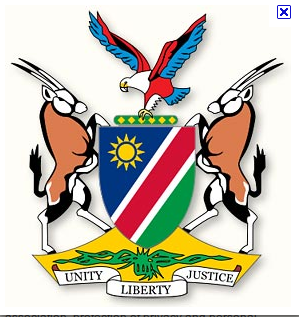
The Legislative Assembly, consisting of all political forces of the country, passed on 9 November, 1990 unanimously Namibia's democratic constitution. It grants the citizens comprehensive civil rights and the equality of all Namibians before the law, which marked the biggest progress compared to the past. Also freedom of speech, religion, assembly and association, protection of privacy and personal property as well as the right to freedom and physical integrity were legally established. Politically, Namibia became a secular presidential democracy with a multi-party system and the classical division of powers between the legislative, executive and jurisdictional bodies.
Wednesday, August 31, 2011
Training
On Tuesday was training day for Tamaki Marist club at Pt.England reserve at 4:30 pm the best thing about training was that it was going to be dirty and wet because sometimes it would get slippery and muddy which will make it harder for us to train in and it will be fun for us to play init to after training which finishes at six o,clock at night.
The first training we do is sprints and then we split to different coaches,TJ and Odomu takes the forwards and Roger will take the backs to do line outs and a move we like to call is quick mall but the most we train at is to get into the ruck and how to get out of a ruck with the ball running for a try but then the next thing we do is that we have a little game which is called catch the bomb.
But before we leave we have a game of rugby against each-others once the other team kicked of to us
Samoa

Independent Samoans are very tradition-oriented, very steeped in a complex set of social hierarchies, courtesies and customs that regulate their social, religious and political life. Independent Samoan culture is based on fa'amatai, a system of government that has a chief, or matai, governing an entire aigaor extended family. Wealth and food are distributed on a needs basis and honour and social standing is shared or shouldered equally by all members of the aiga. The matai represents the family on the village council, metes out justice, and makes sure that all customs are properly observed. In fact Independent Samoa has more rules of etiquette than a finishing school for young ladies and a keen sense of propriety and respect. The matai is also a living archive, responsible for remembering the ancient folk lore, the family genealogies, and the stories of the old gods, and passing them onto his successor.
Although Samoan culture dates back thousands of years and is still passed on through poems, genealogies and stories of the old gods, most Samoans these days are devout Christians. Religion is a big part of Samoan life and Sunday service is the most important event in the week.
Absolute fealty to, and respect for, the church leader is a must, as is the strict observance of religious rules. This whole-hearted embracing of a transplanted religion may seem a little odd but more than one person has suggested that Christianity on the islands has been 'samoanised'. In much the same way that games of cricket are played with three-sided bats and Samoan checkers can include eccentric rules like jumping over the whole board, so the Samoan version of Christianity often has non-Samoans scratching their heads in bewilderment.Independent Samoans are very tradition-oriented, very steeped in a complex set of social hierarchies, courtesies and customs that regulate their social, religious and political life. Independent Samoan culture is based on fa'amatai, a system of government that has a chief, or matai, governing an entire aigaor extended family. Wealth and food are distributed on a needs basis and honour and social standing is shared or shouldered equally by all members of the aiga. The matai represents the family on the village council, metes out justice, and makes sure that all customs are properly observed. In fact Independent Samoa has more rules of etiquette than a finishing school for young ladies and a keen sense of propriety and respect. The matai is also a living archive, responsible for remembering the ancient folk lore, the family genealogies, and the stories of the old gods, and passing them onto his successor.
Dancing, singing and music play a big part in Samoan culture. The fiafia was originally a village play or musical presentation performed by a number of villagers but these days it simply refers to a bit of a Samoan knees up at the larger hotels. Both the siva (a dance performed by women acting out
Although Samoan culture dates back thousands of years and is still passed on through poems, genealogies and stories of the old gods, most Samoans these days are devout Christians. Religion is a big part of Samoan life and Sunday service is the most important event in the week.
Absolute fealty to, and respect for, the church leader is a must, as is the strict observance of religious rules. This whole-hearted embracing of a transplanted religion may seem a little odd but more than one person has suggested that Christianity on the islands has been 'samoanised'. In much the same way that games of cricket are played with three-sided bats and Samoan checkers can include eccentric rules like jumping over the whole board, so the Samoan version of Christianity often has non-Samoans scratching their heads in bewilderment.Dancing, singing and music play a big part in Samoan culture. The fiafia was originally a village play or musical presentation performed by a number of villagers but these days it simply refers to a bit of a Samoan knees up at the larger hotels. Both the siva (a dance performed by women acting out impromptu stories with their hands) and the sa sa (a dance performed to the beating of a wooden mallet) are performed. Tattooing is a significant rite in Independent Samoa and involves more than a visit to the local Tatt Parlour on a Friday night full of Dutch courage and bravado to get a Betty Boop figure stenciled on a bicep. At age 12 or 13 Samoan males go to the tufuga, or tattooist, and get tattooed from waist to knee. The tattoos represent the strength of a man's heart and his spirituality but on a more practical note if you can bear the pain of a months' worth of tattooing, you can bear anything.
Food in Samoa derives mainly from tropical crops, root vegetables, coconut products, fresh fruit, pork, chicken and, of course, seafood. The traditional Polynesian feast is cooked in an umu, an above-the-ground oven. The traditional Sunday meal is nearly always cooked in the umu. 'Ava or kava is a drink made from the ground roots of pepper plants and has a mild tranquilising effect. It is usually drunk as a prelude to ceremonial gatherings and village meetings.
impromptu stories with their hands) and the sa sa (a dance performed to the beating of a wooden mallet) are performed. Tattooing is a significant rite in Independent Samoa and involves more than a visit to the local Tatt Parlour on a Friday night full of Dutch courage and bravado to get a Betty Boop figure stenciled on a bicep. At age 12 or 13 Samoan males go to the tufuga, or tattooist, and get tattooed from waist to knee. The tattoos represent the strength of a man's heart and his spirituality but on a more practical note if you can bear the pain of a months' worth of tattooing, you can bear anything.
Food in Samoa derives mainly from tropical crops, root vegetables, coconut products, fresh fruit, pork, chicken and, of course, seafood. The traditional Polynesian feast is cooked in an umu, an above-the-ground oven. The traditional Sunday meal is nearly always cooked in the umu. 'Ava or kava is a drink made from the ground roots of pepper plants and has a mild tranquilising effect. It is usually drunk as a prelude to ceremonial gatherings and village meetings.

Thursday, August 25, 2011
Badminton writing

WOW!! I said to my self this looks like its going to be a fun day today,once I looked at our raster that we were doing today on the board it had badminton on it and in my mind I shouted YES!! I wonder if we get to get trained from a pro badminton player,when I saw it I had the sudden urge to go home and get out my racket and practice all day until I turn into a professional.When it was our turn we were all excited because we knew that we were all going to have a game against each-other but we did not have time but we had more time to practise our trick shots,the first move she teach-ed us was the move when you had to hit the shuttle from under your leg when we fished our turn it was another classes time to get teach-ed.The week after we got to have another turn with the badminton teacher in the hall but this time we got to play some exciting games when we got to face off against our class mates my partner was Richard it was so much fun because i kept on beating him through out the whole game but it did not matter because it was just a game well at lest that's what I kept telling Richard because he would be the one always getting angry.But the next activity we had was the one when we had to get all five shuttles into the bin with out missing it was so easy for the pros's but but not easy for us trainees because we would always MISS MISS and MISS!!! all the time. I thought it was stink because we had to go back to class because it was nearly Morning tee time so we said thank you for teaching us about BADMINTON!!! and how to play the right way and showing us some cool skills that we have developed from you in the last two weeks.
Monday, August 22, 2011

Subscribe to:
Posts (Atom)